Turn walk-past traffic into a line outside your store.
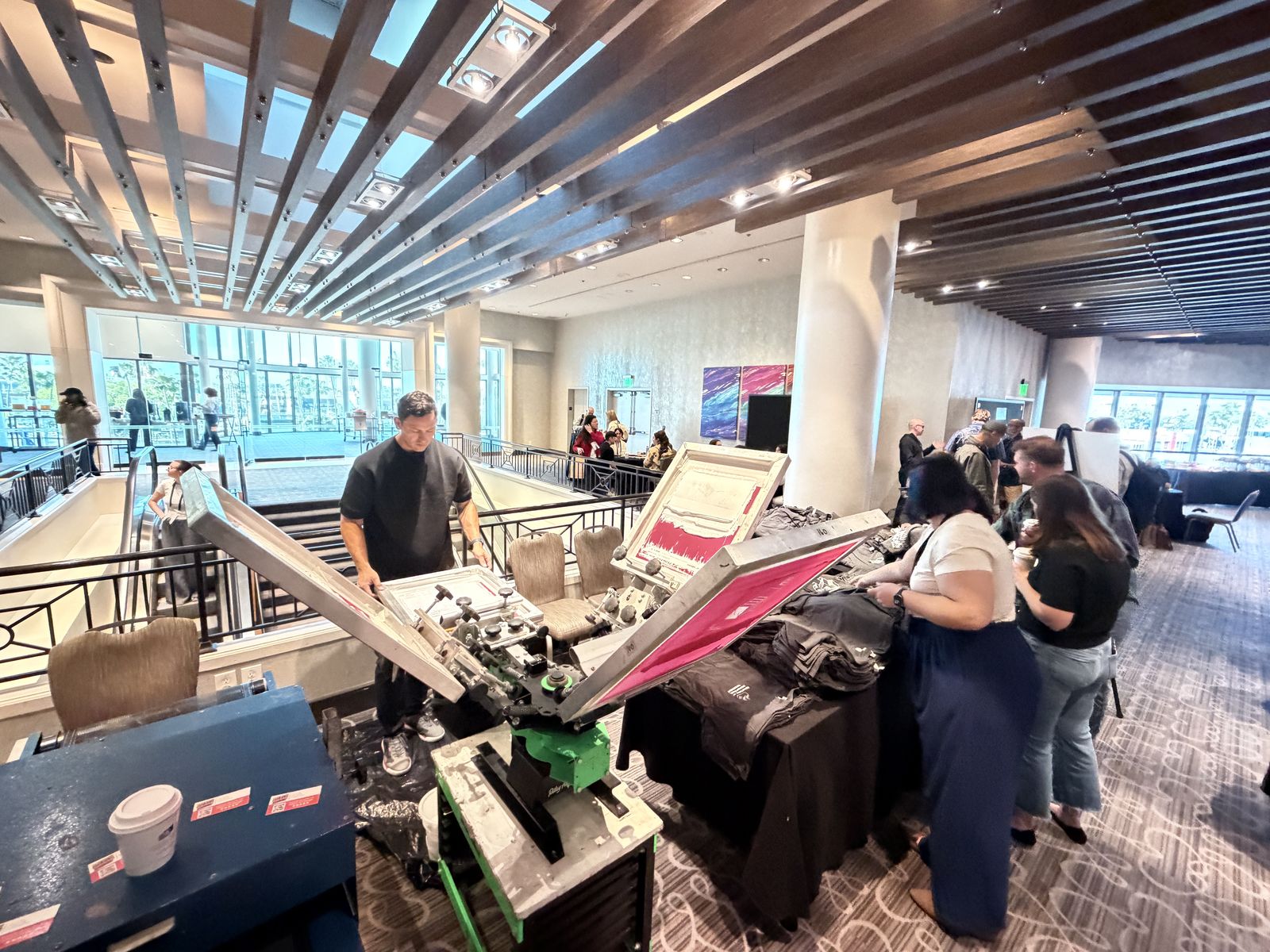
Retail pop-ups live or die on a single physics problem: giving a stranger a reason to stop walking. A press in motion solves it. People stop for process — the lay-out, the clamp, the steam, the fluff — and once they have stopped for ninety seconds, they are yours.
Three retail plays
Store opening: free initial cap with any purchase over a threshold. The cap is the receipt everyone photographs. Product launch: the patch bar customizes the launch product itself — totes, jackets, headwear — so the demo and the giveaway are the same motion. Mall or market pop-up: paid personalization as its own revenue line; chenille pieces support real ticket prices because guests can feel the difference.
Making the economics work
- Gate the giveaway to a purchase or signup so the queue converts instead of just consuming blanks.
- Set a one-letter-one-shape house rule to keep per-guest cost predictable; upsell full names for a fee.
- Position the press in the sightline of foot traffic — window-facing, not tucked in back. The machine is the billboard.
- Weekend afternoons beat evenings for retail; we schedule crew hours to the center’s actual traffic curve.
Footprint reality
Retail floors are tight, so this is our most compressed build: one 8-foot table, cap press, letter board on a vertical rack. One circuit, no water, no mess — property managers approve it without drama. Numbers live on the pricing page; the station itself is described under services.
Measuring whether it worked
Retail teams already track the right numbers — just point them at the station. Finished-piece count against transactions tells you conversion; the timestamp curve on pressed pieces maps your true traffic hours; and the signup gate, if you run one, hands you a contact list exactly as long as the cap count. We share our tally sheet after every retail date so the recap deck writes itself.